We don't seem to take the Freedom of Speech and Expression as seriously as we need to in India. Technically, the Constitution permits "reasonable restrictions" (Article 19(2)) on the grounds of:
-protecting India's sovereignty and integrity
-security of the State
-friendly relations with foreign states
-public order
-decency or morality
-contempt of court
-defamation
-incitement to an offence
The recent arrest of two women in Mumbai for an innocuous post on Facebook reveals how easily this cardinal right can be dispensed with in the name of "reasonable restrictions." Or take the ban on Kamal Hassan's movie in Tamil Nadu, while the movie has released uncensored in other states without any public order issue. While no right can be absolute, the restrictions should not be so open-ended that they undermine the freedom altogether. What's your take?
I'm also reminded of this excellent debate:
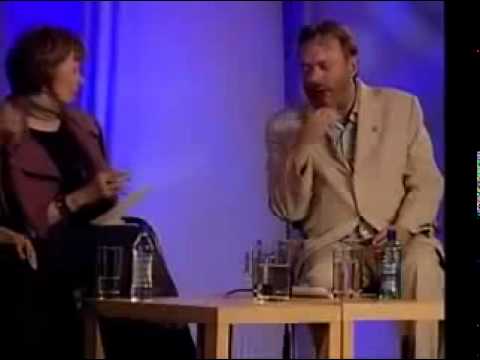
Tharoor vs. Hitchens, in excellent 240p!


Comments
More often than not, there is too much of a negativity shown against Muslims. The short video below gives very logical arguments from an independent perspective.
Disclaimer: I am no Khan and nor do I support film-makers who take the idea of liberty too far, or terrorists who kill in the name of religion.
"The Supreme Court on Friday rapped political commentator Ashis Nandy for his alleged anti-SC/ST remarks, but protected him from imminent arrest in connection with the four FIRs lodged against him in four states under different sections of the SC/ST Act and the IPC.
Nandy, 76, has been charged with criminal intimidation under Section 506 of the IPC and various non-bailable sections of the SC/ST Act in the wake of certain remarks he made about corruption among SCs/STs at the recently-concluded Jaipur literary festival. "
sometimes i wonder what prompts them to make such comments......... somewhere i'd read that one should be allowed to express his thoughts.....otherwise people would always feel under an obligation to say things so as not to offend others......what is wrong with such an obligation?
A civilization advances by the power of progressive ideas, which are often offensive. Take the idea that the world was round, not flat. I'm sure it ticked off the church. Better yet, take the idea that the caste system should be abolished. Did it not shake up the foundations of our religion and social system? If that idea were struck down as offensive, where would our country be today?
A civilization advances by discussion and debate. If we start censoring every "offensive" speech or movie, we would stagnate. Worse yet, if the offended among us decide to retaliate to a speech or cartoon with violence, we would all become mute.
That said, there may be some cases where the value add of an expression is just too insignificant compared to the net offense taken. These ideas, according to our Constitution, may be censored. But who is to decide what expressions meet this bar? Whoever makes that call is human, and thus inherently prejudiced. So some may even argue for absolute freedom of expression.
As enlightened citizens/believer of any religion /members of any community (be it ,clan, tribe,caste, region, nation, religion or whatever), one's emotional quotient should not be so weak that he/she gets offended at the slightest utterance of criticism. Freedom of speech of expression weighs quite heavily against the right to not get offended for the simple reason-'the more we are closer to the truth, more progessive we will be as human beings/as members of an enlightened community called 'humanity' '. And truth will only shine forth when critics will remove the rusted plaque of self-righteousness/ bigotry. Freedom of Speech is a prerequisite for development of science and a reformist and rational community.
There should not be any place for offense, at least, in as mystic/transcedental/beyond-reason things as spirituality/things related to conception of God and other world. No one is right and no one is wrong in such matters. I am no Hindutva-vadi , I am as allergic to majority communalism/bigotry as to minority-communalism (btw all things like naxalism, fascism , nazism are also a sort of bigotry). Human catastrophe/apocalypse-before-our-own-eyes-and-of-our-own-makings like that of 1947/1984/2002 had majority community as equally blameworthy. Reading about these sometimes makes me disgustful of my being as a human being. But seeing through events all around the world I can vouch for the fact that minority community is more closed to critical examination than the majority.(Anyone, Please pounce upon if you feel i am biased).
A few notes
*indian muslim personal law less progressive than Pakistan (http://www.saglobalaffairs.com/back-issues/972-issue-of-womens-rights-in-south-asia.html > see fifth para). majority community accepted reforms but minoroty didn't.
*I totally accept that all muslims are not terrorists but inferring from the news all around the world i also find out that major terrorist organisations based on religion are Islamic.
*Once a royal community now is socially and educationally backward than SCs reports Sachhar report and it can't be blamed on the majority.
and one personal account
* I studied philosophy of religion (which UPSC probably no longer want me to) but i found almost nil discussion of Islamic conceptions while whole subject centred around christian and old veda-based indian philosophic systems. It was probably because of fear of backlash.
All this necessitate that the minority community begins questioning the leading prevalent interpretations of its scriptures by so-called 'dharm/kaum ke thekedars'/ backward-looking clergy. As CBFC has passed Vishwaroopam, I strongly believe that it does not contain any potential inflammatory material . Even if it criticizes/offends muslim community, it will do more good than harm to it just like Ramanujam's essay would have done to majority community.
If you would have read the article of yogendra yadav, you would have realized he was taken out of context. What he meant to say was completely different. This is what happens in most cases. Out of context, rumors, incomplete information.
when i look back at all i talked about in the previous comment, I somehow got a feel it was very ideal. All that i talked 'should' happen in the ideal case. But, when things operate in the real world( jus like Gambitt said a world of 'information assymetry') implementation of a principled stand can create havoc. Rights, Freedom must be exercised wisely.
Very simple. India follows only nominal secularism and not the substantive(both in terms of political and social values) one.